What shipped
A custom landscaping experience that turns project exploration into a qualified quote.
- Timeline
- June–July 2026
- 15-service catalog
- Guided design tour
- Property-plan builder
- Before/after gallery
- Service-area checker
- Four-step quote intake
- Local SEO
The problem
A landscaping buyer rarely knows the service name. They know what they want the property to become.
The site had to explain 15 kinds of work without becoming a contractor directory. It also had to qualify location, scope, timing, budget, and site conditions before the crew spent time driving to an estimate.
The answer was an interactive path from inspiration to evidence to a structured request—not a gallery followed by a generic contact box.
Model the way a property gets planned
The content starts with the company’s Georgetown base, 11 named service towns across Sussex and Kent Counties, real project photography, actual service categories, and the information the crew needs before an estimate is useful.
A real Coastal Crest landscape plan became the centerpiece: 12 plant types, seven hardscape and lighting features, and eight guided zones that explain privacy, poolside use, paths, dining, curb appeal, and accent planting in context.
Show the thinking behind the finished yard
Project photography proves the physical work. The guided plan proves the design work behind it. A restrained green and gold system, cinematic media, and motion-aware fallbacks frame both without overpowering them.
The estimate starts before the form
Visitors can inspect plant pins, run the eight-stop design tour, drag through five matched before-and-after transformations, and choose from 17 property-plan options. Those choices follow them into the quote flow automatically.
The four-step request adds manual service choices, property town, timeline, budget, preferred contact method, notes, and an optional image. The 11-town coverage checker returns either a qualified match or an honest ‘not certain’ path instead of pretending every ZIP is served.
- Selections survive the scrollbecause the request arrives with the work categories the visitor already chose.
- Design is explorablebecause a guided plan explains why plants, privacy, paths, and outdoor rooms belong together.
- Before and after share the same anglebecause a draggable comparison shows the transformation without marketing sleight of hand.
Local facts are part of the build
Business name, phone, Georgetown base, county coverage, geographic metadata, canonical and social tags, robots directives, and the LocalBusiness graph are kept aligned. Service and FAQ copy answers local buying questions in the document, not in image text.
Static delivery, stateful buying path
Vite ships a small React site with no customer database. React state carries a visitor’s property-plan choices into the quote flow; Web3Forms receives multipart submissions and optional photos. Honeypots, field validation, reduced-motion handling, low-power media fallbacks, and feature flags keep the experience practical after launch.
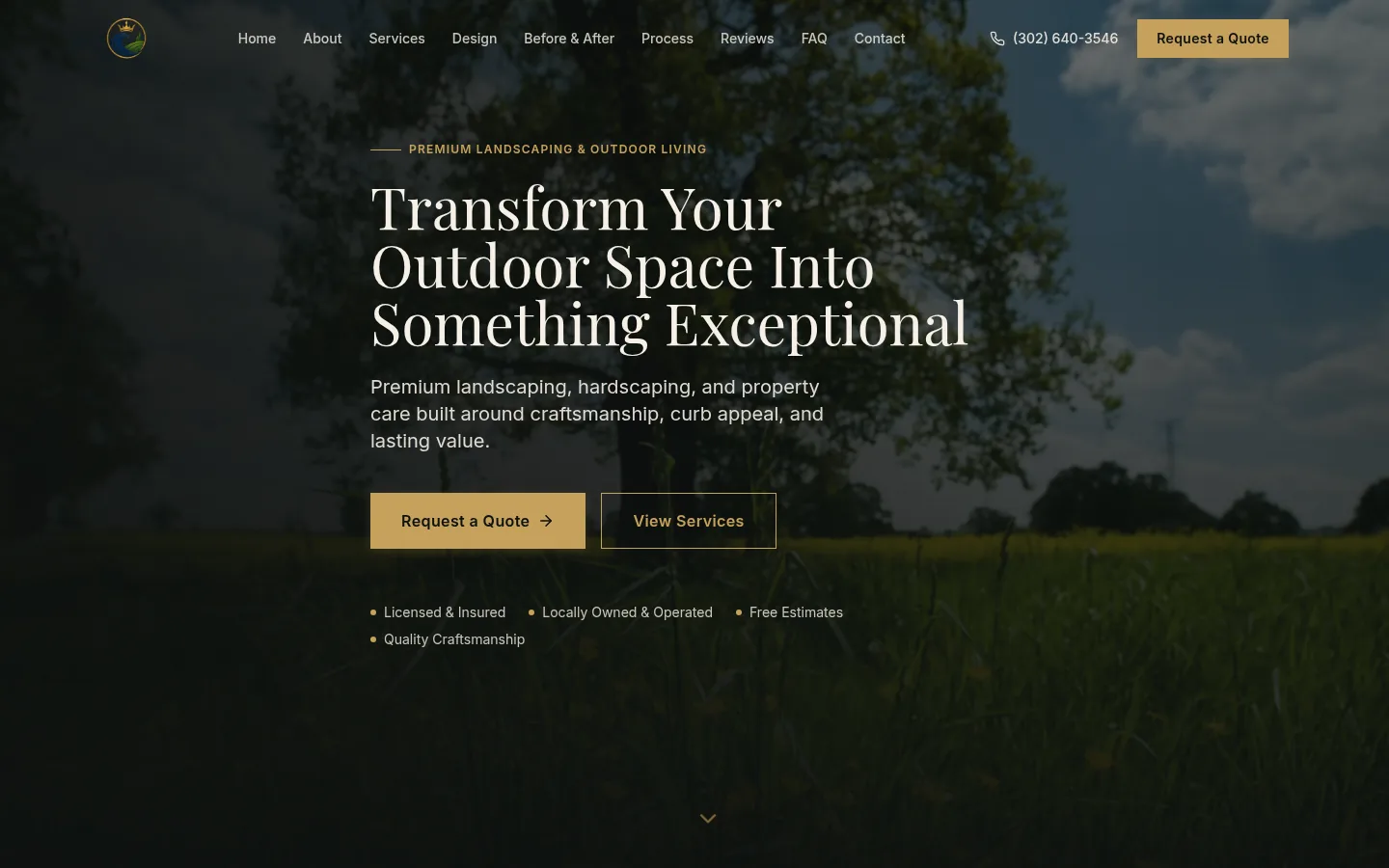
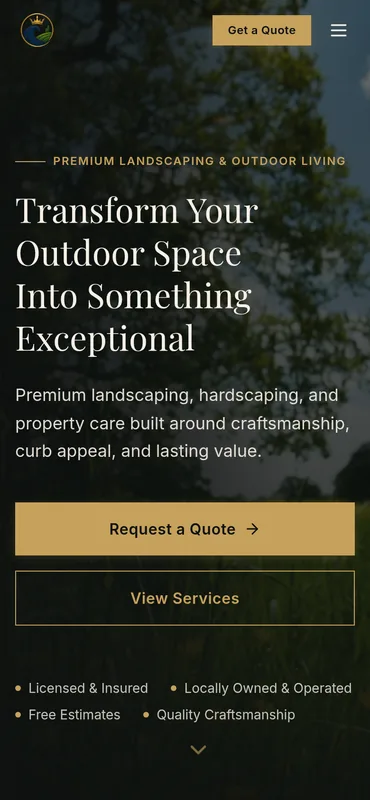
Real screens, not mockups.
What shipped
These are delivered scope figures from the source and repository history. Lead volume and rankings belong to the client and are not claimed here.
Inspiration becomes an actionable brief
The service catalog, guided design, before-and-after work, property planner, coverage check, reviews, FAQ, and four-step quote are one continuous conversion system tailored to how landscaping work is actually bought and estimated.
Have a problem that looks like this?
That's the kind of gap I close. Tell me what's breaking and I'll show you the system that fixes it.