What shipped
An in-development venue platform spanning the guest visit, staff schedule, live park controls, and screen publishing.
- Timeline
- April–July 2026; in development
- 15-route visitor site
- Passes & group sales
- Weather & alert controls
- Staff availability
- Schedule builder
- Signage studio
- Menu publishing
- Admin portal
The problem
A seasonal venue changes by the hour, but its website, staff, and screens still have to agree.
Guests need attractions, height rules, passes, food, groups, hours, weather, contact, employment, and current happenings before they arrive. Managers need to change alerts, visibility, pricing, schedules, staff messages, and menu boards without editing code.
The wider build therefore treats the public site and operating tools as one venue system rather than unrelated pages and admin forms.
Model the whole visit and the shift behind it
The development data covers nine attractions, six pass products, 41 menu records, 14 FAQs, four group packages, 25 gallery records, five employment roles, and eight journal posts.
Behind the public content are employee accounts, availability requests, approvals, calendar and export tools, schedule creation, live park settings, staff announcements, media, and screen publishing.
The venue remains unmistakably Jungle Jim’s
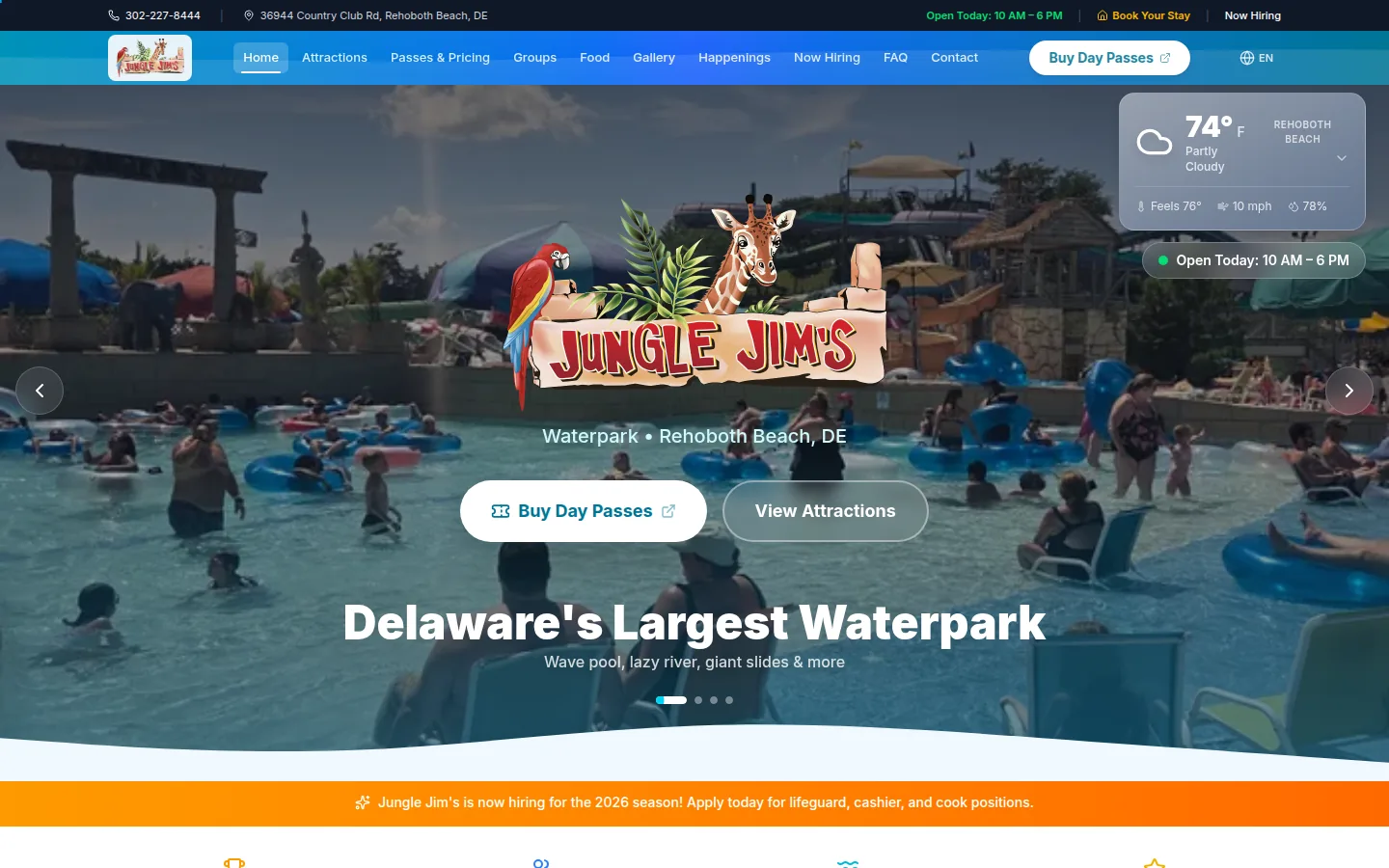
The experience keeps River Safari Waterpark, River Safari Cafe, the Rehoboth setting, family photography, and bright attraction energy visible while giving each route a clear planning job. A tube-rider progress treatment turns scrolling into a venue-specific interaction rather than generic decoration.
Plan the day before reaching the gate
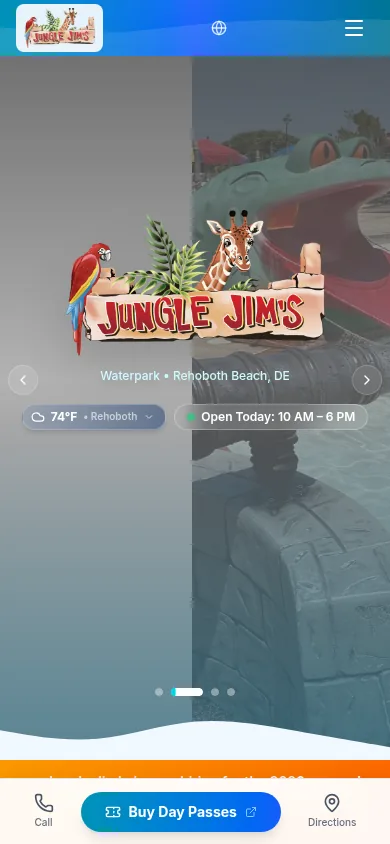
The visitor routes cover attractions with category and height context, daily and seasonal passes, group packages, searchable food with dietary filters, FAQs, contact, gallery, employment, shop, and current happenings. Mobile actions stay close to tickets, directions, and calls.
The manager dashboard can publish weather, information, or emergency banners; show or hide the weather widget and pass products; edit hours; and maintain an internal staff board. Separate staff flows handle availability, approvals, shared calendars, schedule imports, and exports.
- Live alerts are content, not codebecause weather and park-status changes need to reach every page while the situation is still current.
- Food is filterablebecause families plan around dietary needs and kids’ options before choosing where to stop.
- Staff data can become a schedulebecause availability, approvals, calendar views, and exports belong to one operational workflow.
Website, operations, and screen runtime
Next.js and React power 29 application page modules: 15 public visitor pages and 14 staff, availability, and admin surfaces. The Cloudflare layer contains 53 API function modules spanning authentication, employees, availability, menu data, media, boards, schedules, versions, and publishing.
D1 holds operational records, KV carries settings, R2 stores media, and the signage studio provides scenes, layers, reusable menu data, scheduling, history, rollback, readability checks, and player output. This venue work supplied the product lessons later hardened in CanvasRelay.
Real screens, not mockups.
What is built
This is implementation scope from an in-development project, not a launched business outcome. Seed content remains editable, and the public site is not presented as finished production work.
The venue build became a product foundation
The screen editor, player, linked menu records, schedules, publishing model, and fleet lessons began inside the venue work and later became CanvasRelay. The public website, staffing flows, park controls, and screen system show the full operational context that product came from.
Have a problem that looks like this?
That's the kind of gap I close. Tell me what's breaking and I'll show you the system that fixes it.